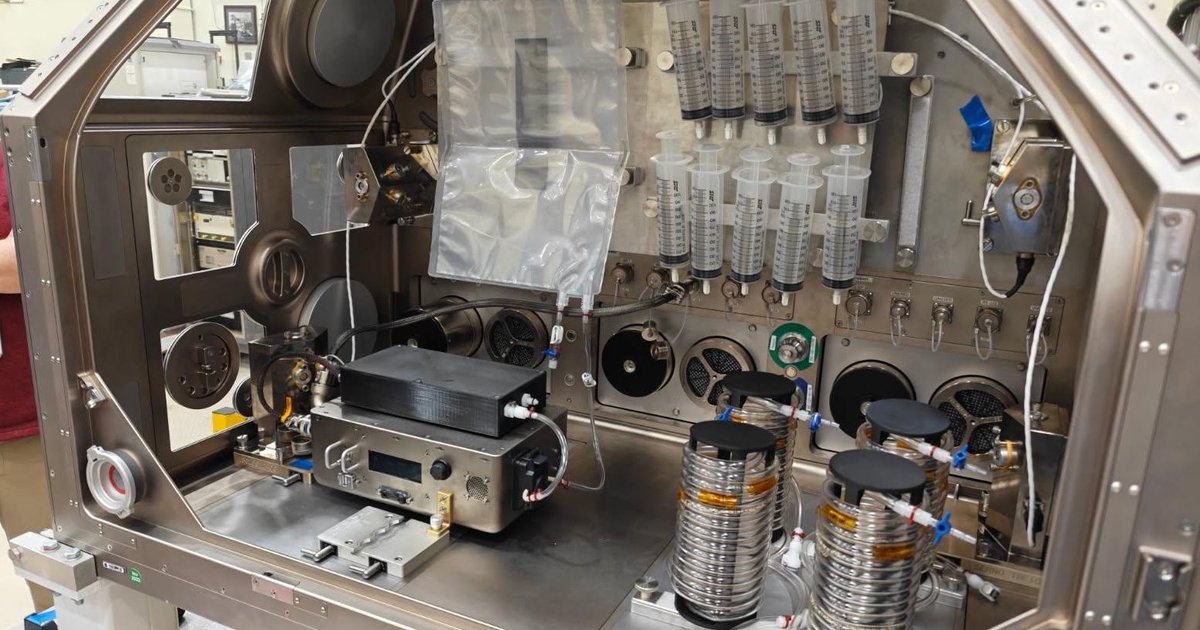
What if a simple liquid could save lives on interstellar missions? NASA’s IV fluid technology is revolutionizing space exploration and could determine the success of future crewed missions. This isn’t just about space—it’s about advancing healthcare for everyone, Earthbound or not.
100 liters of IV fluid might seem trivial on Earth, but in space, it’s a logistical nightmare. NASA faces a critical challenge: how to keep astronauts healthy during long-duration missions without relying on supplies that can expire. As we push deeper into space, the question looms: how will we ensure our astronauts have the medical resources they need?
What’s Actually Happening
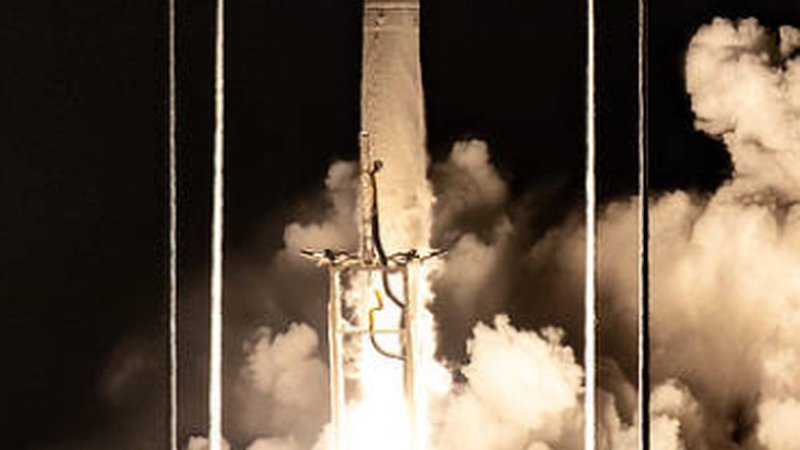
NASA has developed a groundbreaking technology that can create IV fluids in space. The IntraVenous Fluid GENeration Miniaturized (IVGEN Mini) system is designed to produce sterile IV fluids on-demand from drinking water available on the International Space Station (ISS). It flew to the ISS on April 11, 2026, as part of NASA’s Northrop Grumman Commercial Resupply Services 24 mission, marking a significant leap in space healthcare technology.
The importance of this technology cannot be overstated. According to NASA, IV fluids are essential for managing medical conditions that can arise during space missions, such as dehydration or burns. Current IV fluid supplies have a shelf life of only 16 months, making them impractical for deep space missions that could last up to three years. By generating IV fluids in situ, NASA aims to eliminate the risk associated with expired supplies and reduce the cargo weight during missions, which is vital for long-duration explorations.
The Bigger Picture
Video: Liquid Lifeline: "Game Changer: New NASA Tech Can Now Create Medical IV Fluid in Deep Space!"
How On-Demand IV Fluids Transform Space Medicine
Here’s what’s wild: the IVGEN Mini not only addresses immediate medical needs but also opens new avenues for space exploration. This technology operates through a three-step process. (per coverage from arXiv)
**Stage 1:** The system begins by filtering drinking water from the ISS to remove particulates and mineral ions. This is crucial because the microgravity environment can affect how liquids behave, making it necessary to ensure that the water is pure and safe for medical use.
**Stage 2:** After filtration, the processed water is combined with premeasured sodium chloride in another bag, creating sterile IV fluid. This method not only guarantees the fluid’s safety but also allows for precise control over the composition, adhering to United States Pharmacopeia standards for medical-grade fluids.
**Stage 3:** Finally, this technology significantly reduces the logistical burden on future missions to Mars or beyond. In scenarios where 100 liters of IV fluid would take up valuable space and weight, the IVGEN Mini allows crews to produce exactly what they need, when they need it, without the complications of storage and expiration.
Real-World Case Study
Consider the Apollo missions, where astronauts faced limited medical resources during extended missions. They had to rely on pre-packaged supplies, often worrying about their viability. Fast forward to today: NASA’s innovative approach with the IVGEN Mini could mean a dramatic shift in how we think about medical logistics in space. For example, during the Apollo 15 mission, astronauts had to deal with dehydration without adequate IV fluid options. The IVGEN Mini could have transformed their ability to manage such situations, potentially saving lives.
What This Means for America

This technological advancement has profound implications for American space exploration. It not only enhances the safety of astronauts but also strengthens the U.S. position in the global space race. As other countries ramp up their space exploration initiatives, having the capability to produce essential medical supplies in space sets NASA apart. (according to Science)
Moreover, this innovation could lead to new job opportunities in related fields. Companies involved in developing space technologies, like Sierra Lobo, Inc. and various contractors working with NASA, might see increased demand as more missions are planned. The broader implications extend to supply chains and manufacturing sectors, as companies pivot to support this new frontier in healthcare.
What This Means for You

As an American, this innovation directly impacts you. The advancements in space exploration technology can trickle down to terrestrial applications, enhancing medical technologies here on Earth. Imagine the potential for on-demand medical supplies in remote areas or disaster zones. This could change how we approach healthcare logistics globally.
Additionally, if you’re an investor, keep an eye on companies involved in space technologies. With NASA’s increased focus on long-duration missions, the demand for innovative solutions like the IVGEN Mini will likely rise, presenting opportunities for growth in this sector. You should also be aware of how these developments might influence government funding and policies in space exploration.
NASA IV fluid technology is set to revolutionize medical care in space, addressing the unique challenges of zero-gravity environments. By enhancing intravenous therapies, this innovative approach ensures astronauts receive essential hydration and nutrients during long missions. As human space exploration expands to Mars and beyond, the advancements in NASA’s IV fluid technology could have profound implications, not only for astronaut health but also for emergency medical protocols on Earth, where similar techniques can improve patient outcomes in critical situations.
Key Takeaways

- NASA’s IVGEN Mini can produce IV fluid in space, revolutionizing astronaut healthcare.
- Current IV fluid supplies expire within 16 months, making them unsuitable for long missions.
- The system filters drinking water and combines it with sodium chloride to create sterile fluids.
- This technology addresses logistical challenges in deep space missions.
- IVGEN Mini could reshape medical practices on Earth by offering insights into on-demand supply production.
- Investors should watch the space tech sector for growth opportunities linked to NASA’s initiatives.
What Happens Next
In the coming months, NASA will conduct further tests of the IVGEN Mini aboard the ISS. The outcomes of these tests will be critical in determining whether this technology can be deployed on future missions, such as the Artemis program. By the end of 2026, we can expect to see results that will either pave the way for human missions to Mars or prompt a reevaluation of our approach to space health logistics. The stakes are high, and the window for innovation is closing fast. (as reported by Nature)
Bottom line: the future of space exploration is being redefined.
Marcus Osei’s Verdict

Here’s the harder truth: Is NASA prepared for the ethical implications of ensuring equitable access to this technology among astronauts? The implications for long-duration space missions are vast, yet we can’t ignore the possibility of inequities in medical care, even among a select group of astronauts.
Looking internationally, this reminds me of how countries like Japan have approached space exploration—investing in advanced robotics and autonomous systems to support their missions. Their foresight in integrating technology like this reflects a broader understanding of the multi-layered complexities involved in long-term space travel. As we push further into space exploration, shouldn’t we ensure that we’re adequately prepared for health challenges faced by astronauts, just like Japan?
I predict that by mid-2027, we’ll see the first successful tests of this IV fluid technology on a crewed mission. If NASA executes this effectively, we could drastically change how we think about medical care in space and set a standard for future missions beyond Earth’s orbit.
Frequently Asked Questions
What is NASA IV fluid technology and how does it work?
NASA IV fluid technology involves advanced intravenous solutions designed for use in space. It delivers essential fluids and medications to astronauts, helping to treat various medical conditions that may arise during missions beyond low Earth orbit. This technology ensures crew health and safety in the challenging environment of space.
How is NASA's IV fluid technology beneficial for astronauts?
The IV fluid technology developed by NASA is crucial for maintaining astronauts' health during long-duration space missions. It enables prompt treatment of dehydration, nutrient deficiencies, or medical emergencies. This capability enhances crew resilience and supports mission success by ensuring that astronauts receive timely medical care.
What challenges does NASA face when implementing IV fluid technology in space?
Implementing IV fluid technology in space presents several challenges, including microgravity effects on fluid behavior and the stability of medical solutions. NASA addresses these issues through rigorous testing and development, ensuring that IV systems function effectively in the unique environment of space, ultimately safeguarding astronaut health.