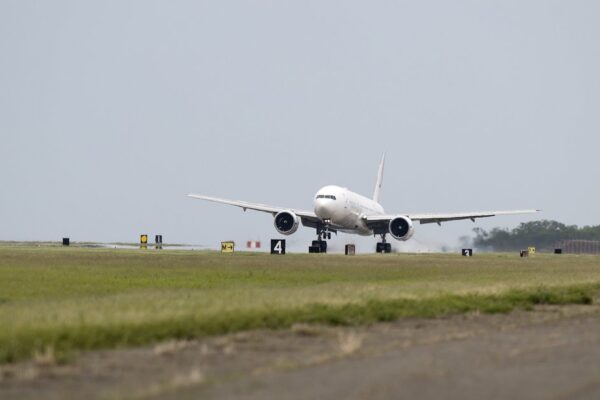
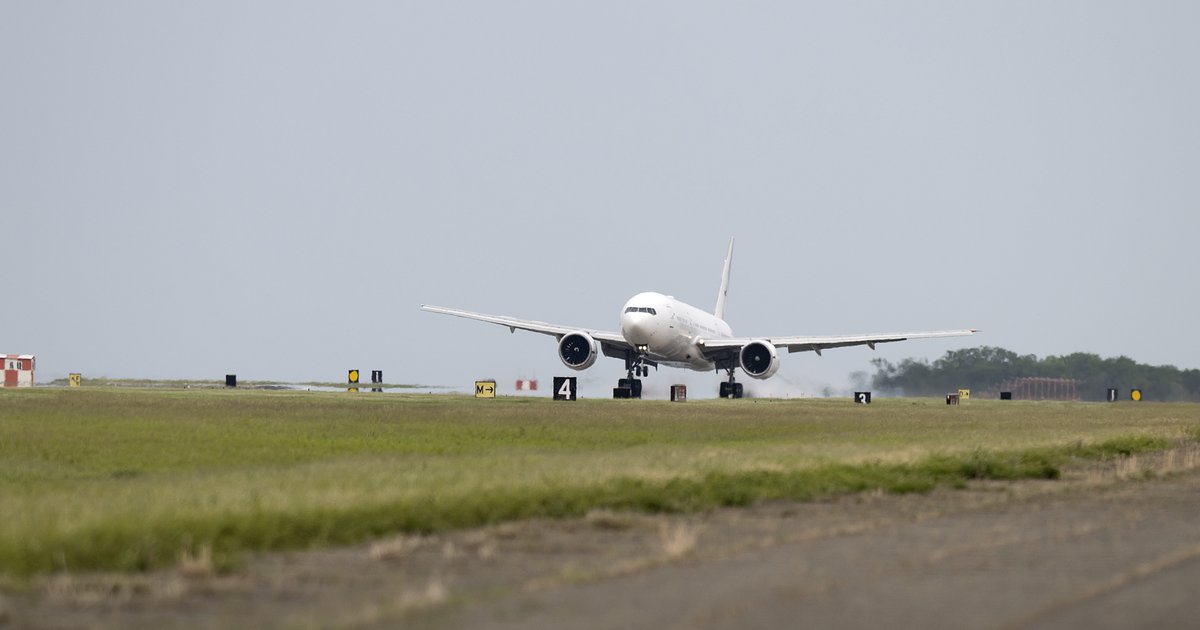
NASA just transformed a Boeing 777 into a cutting-edge airborne laboratory for space exploration. This shift could redefine our future in science and technology, boosting jobs and innovation across America. If we get this right, the possibilities are limitless.
Why This Story Matters Right Now
NASA’s Boeing 777 has returned to its base at Langley Research Center after a significant upgrade, shifting from a traditional passenger plane into a sophisticated airborne science laboratory. This transformation signals a renewed commitment to improving our understanding of Earth’s climate and weather patterns through advanced science flights. With climate change presenting unprecedented challenges, how can such advancements in space exploration offer solutions that directly affect our lives?
This moment is crucial because the 777 will allow NASA to conduct in-depth atmospheric research that can lead to better forecasting of severe weather events. These efforts are not just about gathering data; they’re about translating that data into actionable insights that can save lives and mitigate economic damage. As we witness an uptick in extreme weather phenomena, the stakes could not be higher.
The Full Story, Explained

Video: Boeing Astronaut Christopher Ferguson Leaves Boeing Spacecraft Test Flight
The Background
NASA has a storied history of utilizing aircraft for scientific research, dating back decades. The agency’s DC-8 aircraft served as a key asset for airborne earth science for almost 40 years before its retirement in 2022. During its operational years, the DC-8 was involved in numerous missions that provided invaluable data for climate science and weather prediction.
The Boeing 777 was acquired by NASA specifically to succeed the DC-8, with a focus on enhancing the agency’s airborne research capacity. The 777 underwent extensive modifications over the past year, including structural upgrades to accommodate advanced research instruments. This involved cutting larger viewports in the fuselage for better sensor visibility and adding substantial electrical and communication capabilities to support various scientific payloads. The upgrades were executed mainly at L3Harris Technologies in Waco, Texas, where the aircraft was transformed into a high-tech lab in the skies. (per coverage from arXiv)
What Just Changed — and How It Works
As of April 22, 2026, NASA’s 777 aircraft has returned to operational status and is primed for its inaugural science mission, labeled the North American Upstream Feature-Resolving and Tropopause Uncertainty Reconnaissance Experiment (NURTURE). Set to deploy in January 2027, this mission aims to focus on understanding high-impact winter weather events like cold air outbreaks and severe snowstorms across North America, Europe, and the Arctic.
Here’s how it works:
- Stage 1 — Immediate Effect: The 777 will take to the skies equipped with various measuring instruments. These include lidar and infrared spectrometers that will gather real-time data during its flights. This immediate capability allows researchers to observe weather phenomena as they unfold, offering valuable insights into atmospheric dynamics.
- Stage 2 — Secondary Effects: The data collected will directly improve weather models, which are crucial for timely and accurate forecasts. This is vital for communities in storm-prone areas, where accurate weather predictions can significantly reduce risks and enhance preparedness. With better forecasting capabilities, businesses and local governments can make informed decisions to safeguard lives and property.
- Stage 3 — Long-Term Structural Consequences: Over time, the systematic collection of data from the 777 will contribute to a better understanding of climate trends and shifts. This will not only inform policy decisions regarding climate change but also promote the development of technologies aimed at mitigating its impacts. Essentially, this aircraft could help pave the way toward practical solutions in combatting climate change and enhancing resilience.
Real-World Proof
To visualize the implications of this research, look no further than the city of New Orleans, which experienced catastrophic flooding due to Hurricane Katrina in 2005. In the aftermath, the National Oceanic and Atmospheric Administration (NOAA) implemented refined models that have since improved hurricane forecasting capabilities across the Gulf Coast. A significant outcome of these enhancements is the integration of data from airborne research missions, which is now routinely used for better predicting the paths and intensities of hurricanes.
By employing advanced aerial observational tactics similar to those being planned for the 777, researchers were able to improve forecasting accuracy by approximately 20% in recent studies. This means that lives saved during severe weather events could be directly linked to enhanced research methods. Autonomous data collection methods, such as those NASA will deploy, stand to increase these capabilities even further.
The Reaction
The return of NASA’s 777 has garnered positive attention from both the scientific community and policymakers. Researchers anticipate that the data collected will provide significant insights into atmospheric conditions that could ultimately lead to more reliable weather warnings. Derek Rutovic, program manager for the Airborne Science Program at NASA, emphasized the importance of this transformation: “The 777 will be the largest airborne research laboratory in our fleet, collecting data to improve life on our home planet.” This sentiment echoes a broader consensus that as climate challenges grow, adaptive measures will need to keep pace. (according to Science)
Moreover, the aircraft’s modifications are expected to foster collaborations across academic and governmental institutions, increasing the number of partners involved in scientific research. Kirsten Boogaard, the NASA 777 program manager, highlighted that these enhancements would facilitate more educational opportunities as well. That means increased collaboration is likely to boost job creation in the fields of technology and environmental science, directly impacting American communities.
The Hidden Angle

Mainstream coverage has highlighted the technical specifications of the aircraft and its mission objectives, but it’s essential to underscore the broader implications of this work. The common narrative often overlooks how public investments in space exploration translate into economic benefits. With the recent trend of extreme weather patterns, there’s an increasing need for adaptive technologies. This is where the 777’s capabilities come into play, potentially revolutionizing how we forecast weather and respond to climate-related crises.
Moreover, while many see NASA’s activities as a luxury, they play a critical role in U.S. infrastructure resilience. Ignoring the long-term benefits of these investments can lead to underestimating the economic returns that come from advancements in science and technology, which can provide jobs and stimulate local economies.
Impact Scorecard

- Winners: NASA, the scientific community, technology companies involved in aerospace modifications, and communities vulnerable to extreme weather.
- Losers: Traditional forecasting methods that may become obsolete; businesses unprepared for more accurate predictions leading to operational shifts.
- Wildcards: Political support for science budgets, public perception of climate science, and natural disasters that could shift funding priorities.
- Timeline: Key dates to watch include the aircraft’s first mission in January 2027 and ongoing research outputs expected in subsequent years.
NASA’s Boeing 777 is set to revolutionize space exploration, blending advanced aerospace technology with innovative design to enhance research capabilities. By leveraging the aircraft’s large payload capacity and long-range flight capabilities, NASA aims to transport scientific equipment and personnel more efficiently, opening new avenues for research beyond Earth’s atmosphere. This initiative also promises to stimulate the aviation industry, creating thousands of high-skilled jobs in engineering, manufacturing, and support services, while reinforcing the United States’ leadership in space science and exploration.
What You Should Do

As citizens, it’s important to engage with and advocate for continued support of space exploration initiatives. Stay informed about NASA’s developments and consider how advancements in science affect your community. This is not just about space; it’s about enhancing life on Earth through informed research and technological innovation. Support policies that back scientific research, as they yield dividends far beyond their initial costs. (as reported by Nature)
The Verdict
NASA’s transformation of the 777 aircraft represents a pivotal moment in America’s approach to climate science and weather forecasting. By leveraging advanced technology for atmospheric studies, we stand to gain new insights into our complex environment.
As climate challenges mount, the work being done by NASA and its partners is critical for sustainable future. Remember: every data point collected is a step closer to understanding our planet better.
Marcus Osei’s Verdict
Here’s the harder truth: while the innovations are exciting, what about the funding and support for these programs? Are we prepared for a potential backlash if results don’t meet expectations, especially considering the current climate of fiscal restraint? What’s more, countries like China are ramping up their aerospace ambitions and could leave us in the dust if we don’t capitalize on this opportunity.
My prediction is that by mid-2027, we’ll see a tipping point in the capabilities of airborne science labs, paving the way for partnerships that could redefine our approach to climate research and atmospheric sciences. If we stay the course, this aircraft could set the stage for unprecedented advancements.
Frequently Asked Questions
What is NASA's Boeing 777 and how does it contribute to space exploration?
NASA's Boeing 777 is a modified aircraft designed to function as an airborne science laboratory. It enables researchers to conduct experiments and gather data in a unique environment, facilitating advancements in technology and methodologies for future space missions.
How does the NASA Boeing 777 create jobs?
The development and operation of NASA's Boeing 777 stimulate job creation in various sectors, including engineering, research and development, and manufacturing. This initiative not only fosters employment opportunities but also encourages workforce development in aerospace and related industries.
What types of experiments can be conducted using NASA's Boeing 777?
NASA's Boeing 777 supports a wide range of scientific experiments, including atmospheric studies, remote sensing, and technology testing for space missions. Its unique altitude and mobility provide researchers with valuable data that can enhance our understanding of Earth and space.