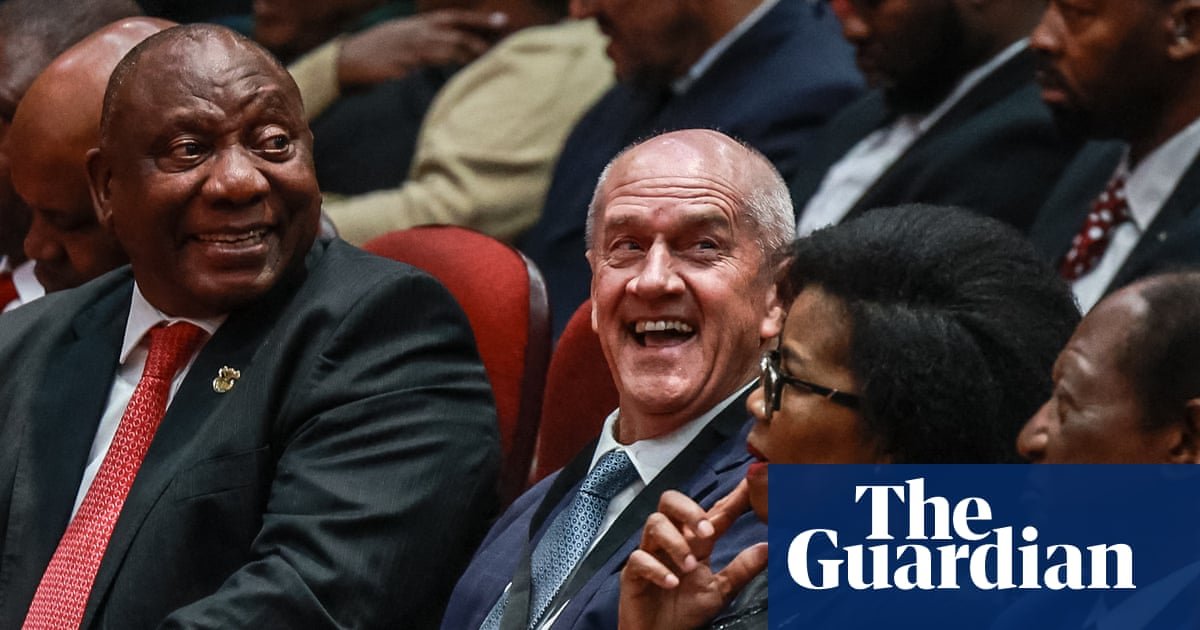
This week, South Africa appointed a former apartheid negotiator as its ambassador to the US. This trending move signals a critical shift in international relations at a time when diplomatic tensions are high. How this impacts ongoing narratives about race and governance will matter to both countries.
South africa us ambassador is the central thread in this analysis, and it underpins the key risk and reward for American readers.
The Bottom Line Up Front
36 years after apartheid negotiations, South Africa appointed Roelf Meyer as its ambassador to the U.S. This move is a direct response to deteriorating relations and accusations of “white genocide” against South Africa. Can this appointment mend a strained diplomatic relationship and reshape perceptions of the country in America?
Meyer’s role in the end of apartheid positions him uniquely as a bridge-builder, but it also complicates the narrative around South African politics. This appointment matters not just for bilateral relations but could also influence U.S. foreign policy and economic interests in Africa. As tensions rise over global issues, the U.S. must reconsider how it engages with South Africa, a key player on the continent.
Breaking It Down
Video: New U.S. ambassador to SA presents credentials: Dr Oscar van Heerden weighs in
Key Development #1 — the core mechanism
On April 15, 2026, South Africa appointed Roelf Meyer as its ambassador to the United States. Meyer previously served as the chief negotiator for the apartheid government during the transition to a democratic South Africa in the early 1990s. He replaces Ebrahim Rasool, expelled in March 2025 after publicly criticizing the Trump administration, highlighting the need for a fresh approach to U.S.-South Africa relations.
This appointment comes amid a backdrop of strained relations, with the U.S. facing backlash for its accusations against South Africa. The South African government has pushed back against claims of systemic violence against white farmers, labeling them as unfounded and politically motivated. Meyer’s role is expected to be threefold: to improve diplomatic ties, to counter misinformation, and to reaffirm South Africa’s commitment to democracy.
Historically, U.S. perceptions of South Africa have fluctuated based on its political climate. This appointment signals a strategic shift aimed at stabilizing relations that have deteriorated over the past few years. It also underscores a broader trend of South Africa attempting to reposition itself on the global stage as a leader in African affairs.
Key Development #2 — a real-world case study
The tensions in U.S.-South Africa relations can be traced back to 2023 when accusations of “white genocide” began circulating in American media. These claims have been amplified by right-wing commentators, leading to increased scrutiny of U.S. foreign policy towards South Africa. Meyer’s appointment is a direct response to this narrative, aiming to reframe the conversation.
A specific example of this impact can be seen in trade relations. In 2024, U.S. exports to South Africa dropped by nearly 11%, largely due to rising political tensions and negative media portrayals. The South African government has since sought to mitigate this by appointing Meyer, who is known for his negotiation skills and ability to communicate effectively with international partners.
The measurable outcome of this diplomatic shift remains to be seen. However, early indicators suggest that Meyer could help restore some level of trust, potentially reversing the downward trend in trade. This could benefit both countries economically, as U.S. companies eye opportunities in South Africa’s growing tech sector.
Key Development #3
This diplomatic maneuver echoes historical precedents from the 1990s. At that time, figures like Meyer were instrumental in guiding South Africa towards a more democratic governance structure. His return to a prominent role now suggests that South Africa is keen to leverage its historical narrative of reconciliation to foster more positive international relations.
The historical parallel is striking. Just as the U.S. played a pivotal role in supporting South Africa’s transition from apartheid, the current administration can find opportunities to engage constructively with a country it once championed. This could also reflect a broader strategy of the U.S. to stabilize its influence in Africa amidst rising powers like China.
The American Stakes

American jobs and markets stand to gain from a renewed focus on U.S.-South Africa relations. South Africa is a gateway to the African continent, which is projected to see a significant growth in consumer markets over the next decade. With a population exceeding 63 million people, there are substantial opportunities for American businesses in sectors like technology, energy, and agriculture.
Politically, Meyer’s appointment could influence U.S. legislative actions regarding trade agreements and foreign aid. Bipartisan support exists for enhancing trade relations with African nations, particularly as the U.S. seeks to counteract China’s growing influence on the continent. This could lead to a shift in U.S. policy, emphasizing partnership over criticism.
Who stands to gain? American companies that establish a foothold in South Africa could benefit from lower operational costs and access to new markets. Conversely, those who fail to adapt to the changing geopolitical landscape may find themselves sidelined. The stakes are high, and the potential for economic collaboration is significant.
South Africa’s new US ambassador is making headlines as a pivotal figure emerging from the historic negotiations during apartheid. With extensive experience in diplomatic relations, this appointment signals a renewed commitment to strengthening South Africa-US ties, enhancing trade partnerships, and addressing pressing global issues like climate change and security. As a prominent voice in international diplomacy, the ambassador’s role reflects the evolving landscape of bilateral relations and highlights the importance of collaborative efforts in addressing socio-economic challenges faced by both nations.
Your Action Plan
To navigate this evolving landscape, here are actionable steps you should consider:
- Monitor U.S. legislative discussions regarding trade with Africa, particularly those focused on South Africa.
- Stay informed about South African economic trends, especially in sectors like technology and renewable energy.
- Engage with industry groups that focus on U.S.-Africa relations to understand emerging opportunities.
- Evaluate investment risks associated with South Africa, particularly in light of the changing political dynamics.
Numbers That Matter
- 11% decrease in U.S. exports to South Africa in 2024, per trade data.
- 63 million population of South Africa, making it the sixth-most populated country in Africa, according to World Bank data.
- 36 years since the end of apartheid negotiations, a critical milestone in South African history.
- Estimated $2.3 trillion market potential in Africa by 2030, as projected by IMF analysis.
- 5 key sectors for American investment in South Africa: tech, agriculture, energy, healthcare, and infrastructure.
The 90-Day Outlook
In the coming months, expect to see intensified discussions around trade agreements between the U.S. and South Africa. Meyer’s role will likely involve navigating these complexities to ensure mutual benefits. By mid-2026, we could witness a reestablishment of stronger economic ties, especially in tech and renewable energy sectors.
This appointment could mark a turning point. Whether it leads to meaningful change depends on how both countries approach their relationship moving forward.
FAQ: Addressing Common Questions
Who is Roelf Meyer?
Meyer is a former chief negotiator for the apartheid government, pivotal in ending apartheid and transitioning to a democratic South Africa.
Why was he appointed as ambassador?
His appointment aims to improve diplomatic relations between South Africa and the U.S., amidst accusations of political bias against South Africa.
How might this affect U.S.-South Africa relations?
This could lead to strengthened economic ties and a reevaluation of U.S. foreign policy in Africa, focusing more on partnership and collaboration.
Marcus Osei’s Verdict
What nobody is asking is whether the choice of an apartheid-era figure signals a regressive approach to foreign relations. Is South Africa trying to appeal to a specific demographic within the US that sympathizes with its historical narrative? Meyer’s role as chief negotiator during the end of apartheid could spark controversy, especially when false accusations of ‘white genocide’ simmer in public discourse.
The situation mirrors how Hungary has leveraged its own historical figures to sway public opinion and diplomacy, which has yielded mixed results. In both cases, using controversial personalities can lead to backlash but also to new alliances.
My prediction? By mid-2027, we will see whether this diplomatic shift yields tangible improvements in US-South Africa relations or if it further alienates a diverse coalition of voices back home.
Frequently Asked Questions
What is the role of South Africa's new US ambassador Roelf Meyer?
Roelf Meyer serves as the US ambassador to South Africa, focusing on strengthening diplomatic relations and addressing mutual concerns. His background in apartheid negotiations positions him uniquely to foster dialogue and cooperation between the two nations.
What challenges does Roelf Meyer face as the US ambassador to South Africa?
Roelf Meyer encounters challenges such as combating misinformation about 'white genocide' and addressing public perceptions of US involvement in South African affairs. His diplomatic experience is crucial in navigating these sensitive issues.
How does Roelf Meyer aim to improve US-South Africa relations?
Roelf Meyer aims to enhance US-South Africa relations through open communication, economic partnerships, and cultural exchanges. His efforts focus on rebuilding trust and collaboration, essential for addressing both countries' interests.