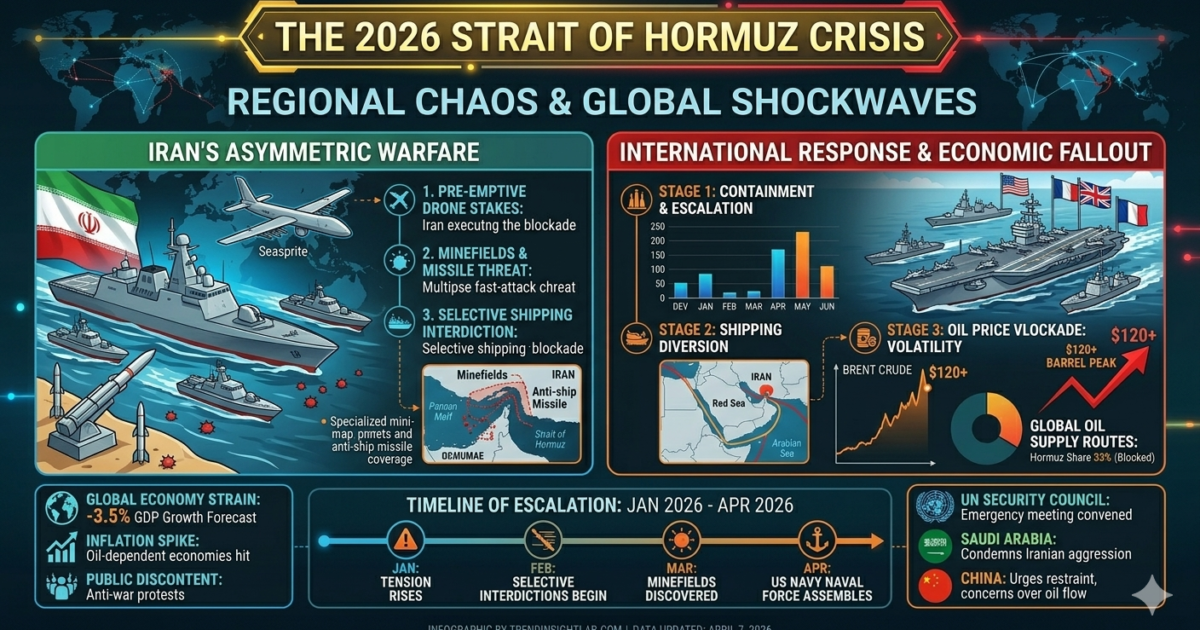
What happens when Iran threatens a crucial shipping lane? The Strait of Hormuz is trending for a reason: $4.7 trillion in oil trade hangs in the balance. Your economy and energy prices could feel the impact if tensions escalate.
Why This Story Matters Right Now
The Middle East is on the brink of a major crisis as tensions between the U.S. and Iran escalate dramatically. President Trump’s recent threats to attack Iranian infrastructure have put Americans on high alert. The implications of this conflict extend beyond the region and could significantly impact your job, your money, and your safety.
This situation is unfolding against a backdrop of heightened geopolitical risks, especially concerning the Strait of Hormuz. This critical waterway is responsible for approximately 20% of the world’s oil supply. A conflict could disrupt oil shipments, driving prices up and affecting your wallet.
The Full Story, Explained
Video: ‘Ok, wow!’: Trump’s profane Iran threat stuns CNN panel
The Background
The U.S.-Iran tensions are not new; they have been simmering for decades. The 2015 Joint Comprehensive Plan of Action (JCPOA) aimed to curtail Iran’s nuclear capabilities but was abandoned by Trump in 2018. This withdrawal led to the reimposition of severe sanctions, crippling Iran’s economy and heightening hostilities.
Fast forward to 2023, when a series of regional incidents, including attacks on oil tankers and drone strikes, escalated tensions even further. Iran retaliated against U.S. sanctions with aggressive posturing, including threats to close the Strait of Hormuz. In response to these provocations, the U.S. deployed additional military assets to the region, increasing the risk of miscalculation.
Key players in this escalating drama include Trump, Iranian leaders, and regional allies like Saudi Arabia and Israel. Each has a vested interest in the outcome, shaping the geopolitical landscape in a way that could lead to broader conflict.
What Just Changed
The situation reached a critical juncture when Trump issued a stark ultimatum last week. He demanded that Iran reopen the Strait of Hormuz by Tuesday at 8 PM ET or face severe military consequences. This threat included a promise of “Power Plant Day, and Bridge Day, all wrapped up in one,” signaling an aggressive military stance.
The Iranian government responded with stern warnings of “devastating” retaliation if the U.S. followed through. This cycle of threats and counter-threats escalates the likelihood of military confrontation. With the global economy still recovering from the pandemic, a spike in oil prices could derail progress.
The U.S. military and legal experts now face dilemmas regarding the legality of potential attacks on Iranian infrastructure. Legal experts warn that such actions could constitute war crimes. This uncertainty adds another layer of complexity to an already volatile situation.
The Reaction
The threats have sent shockwaves through global markets. Oil prices surged immediately following Trump’s statements, with West Texas Intermediate crude rising to nearly $80 a barrel. Investors are nervously eyeing potential disruptions in oil supply from the Strait of Hormuz, which could impact everything from fuel prices to inflation rates.
Political leaders in the U.S. are divided. Some view Trump’s aggressive rhetoric as necessary to deter Iranian aggression. Others, including former officials, argue it risks escalating into a full-blown war. According to The Guardian, many have expressed concern over the potential humanitarian costs of military action.
Meanwhile, Iran’s allies, including Russia and China, are closely monitoring the situation. Their support for Iran could complicate U.S. efforts to manage the crisis. The global response is crucial, as it could either de-escalate or further inflame tensions.
The Hidden Angle
Mainstream media often overlooks the broader implications of this conflict for the American public. While much of the focus is on military capabilities and oil prices, the risk to American lives and livelihoods is very real. A military conflict would likely result in increased U.S. troop deployments and potential loss of life, which should concern every American.
Moreover, the economic ramifications could be severe. A spike in oil prices might lead to higher costs for consumers and businesses, ultimately dampening economic growth. This is particularly worrying as many Americans are still recovering from the economic fallout of the COVID-19 pandemic.
Finally, a less obvious but critical angle is the impact on U.S. domestic politics. The situation could ignite partisan divides, as some may rally around the flag while others criticize the administration’s approach. The potential for military conflict could serve as a litmus test for voter sentiment ahead of the 2026 elections.
Impact Scorecard
- Winners: Oil companies like ExxonMobil and Chevron, which could see stock prices rise with higher oil prices.
- Losers: American consumers facing increased fuel prices and inflationary pressure.
- Wildcards: Diplomatic interventions by countries like China or Russia, and potential sanctions or retaliatory measures from Iran.
- Timeline: Key dates include April 10, the deadline set by Trump, and potential military actions or negotiations thereafter.
The escalating tensions surrounding Iran’s threats in the Strait of Hormuz have captured global attention, as this vital waterway is crucial for oil transportation and international shipping. With nearly 20% of the world’s petroleum passing through this narrow channel, any disruption could have significant implications for global energy markets and geopolitical stability. Recent military maneuvers by Iran, combined with heightened rhetoric, underscore the precarious balance in the region and the potential for a crisis that could reverberate far beyond the Middle East.
What You Should Do
Stay informed and prepare for potential price hikes at the gas pump. Monitor news closely, especially around the April 10 deadline. If you invest in oil stocks, consider reassessing your portfolio based on market volatility.
Moreover, if you have travel plans that may involve the Middle East, consider alternative routes. The situation could change rapidly, affecting travel safety and logistics. It’s best to remain cautious and informed.
The Verdict
The escalating tensions between the U.S. and Iran pose immediate risks to both national security and the economy. The situation is trending towards a potential military confrontation, which could have disastrous consequences for both countries.
By the end of 2026, I predict that we will see a significant increase in oil prices, potentially exceeding $100 a barrel if military action occurs. This will have ripple effects across the global economy, impacting everything from inflation to job growth.
Marcus Osei’s Verdict
The real issue here is whether the U.S. is prepared to back up its threats. What happens if Trump’s bluster fails to produce a diplomatic resolution? I question whether the administration has a coherent strategy to manage the fallout. For all the noise, there’s a chance this crisis could turn into the next flashpoint in U.S.-Iran relations, much like the prolonged tensions over North Korea’s nuclear program.
I predict that if tensions escalate further, we could see significant disruptions in oil supply, leading to price spikes by mid-2027. If diplomacy doesn’t work, the consequences could be dire. Keep an eye on Iran’s military actions, global oil market reactions, and the U.S. political landscape as we move forward.
Frequently Asked Questions
What are Iran's threats regarding the Strait of Hormuz?
Iran has issued threats to block the Strait of Hormuz, a crucial waterway for global oil transportation. These threats arise amidst rising tensions, particularly concerning sanctions and military presence in the region, leading to concerns about potential disruption of oil supplies.
How does the crisis in the Strait of Hormuz affect global oil prices?
The crisis in the Strait of Hormuz significantly impacts global oil prices due to the strait's strategic importance. Any threat to navigation prompts fears of supply shortages, which often leads to increased oil prices in the global market as traders react to potential disruptions.
What are the regional reactions to Iran's threats over the Strait of Hormuz?
Regional reactions include heightened military readiness among neighboring countries and calls for diplomatic solutions. Countries reliant on oil exports, such as Saudi Arabia and the UAE, express concerns about the stability of shipping routes, while the U.S. reinforces its naval presence to ensure safe passage.