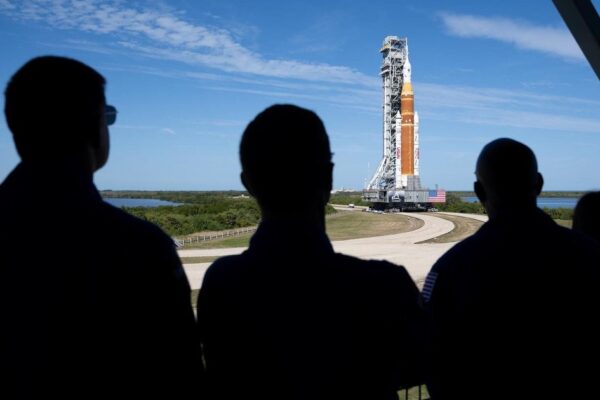
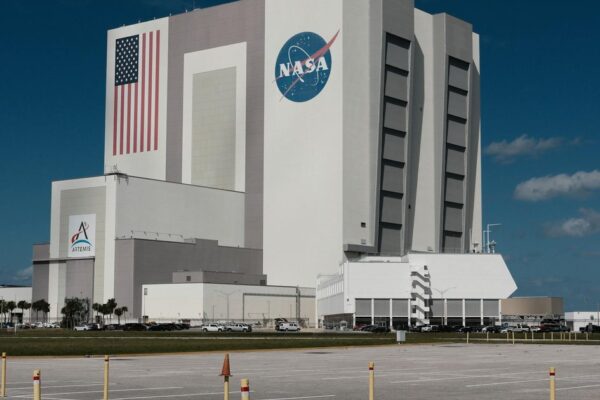
This week, NASA announced its Artemis II mission is on track for launch. This moment marks a pivotal shift for the space industry and could redefine America’s role in global exploration. As private companies race to innovate, your investment in technology could be at stake.
Why This Story Matters Right Now
The upcoming Artemis II moon launch is set for April 1, and it’s a pivotal moment for the U.S. space industry. This mission is not just about sending astronauts to lunar orbit; it’s a demonstration of America’s commitment to reclaiming its leadership in space exploration. As China and Russia ramp up their own space ambitions, the stakes for the U.S. have never been higher.
The urgency of this mission is underscored by the recent geopolitical landscape. The U.S. is facing increased competition in the space sector from China, which has made significant strides in its lunar program. The timing of Artemis II is critical for asserting U.S. dominance in a field that increasingly overlaps with national security. If you care about technological innovation and American global leadership, you should care about Artemis II.
The Full Story, Explained
Video: Artemis II gets ready to head to the Moon | BBC News
The Background
NASA’s Artemis program kicked off in 2017, aiming to return humans to the Moon by 2024. This ambitious timeline faced several delays due to budget constraints, technical challenges, and the pandemic. By 2022, NASA successfully launched Artemis I, an uncrewed mission that tested the Space Launch System (SLS) and the Orion spacecraft. This mission set the stage for Artemis II, which will send astronauts on a five-day journey around the Moon.
Key players in this initiative include NASA, Lockheed Martin (the primary contractor for the Orion spacecraft), and Blue Origin, which has been involved in various aspects of space transportation. The Artemis program is not merely about lunar exploration; it serves as a stepping stone for future Mars missions. By establishing a sustainable human presence on the Moon, NASA aims to leverage lunar resources and technology for deeper space exploration.
What Just Changed
The most recent development is NASA’s announcement that Artemis II is on track for its April 1 launch. This follows a scrubbed test in February, where the rocket was returned to the Vehicle Assembly Building for adjustments. NASA has confirmed that all systems are go, and the team is finalizing preparations for the crewed mission. The Artemis II mission will mark the first time astronauts will travel beyond low Earth orbit since the Apollo program ended in 1972.
NASA Administrator Bill Nelson emphasized that this mission is about more than just science. “This is about inspiring the next generation of explorers,” he stated. As the U.S. continues to invest in the space industry, Artemis II aims to solidify the country’s position in the international space race.
The Reaction
The announcement of the Artemis II launch date has elicited varied reactions. Industry analysts see the mission as a major opportunity for U.S. aerospace firms. According to a report from SpaceNews, successful missions will likely lead to increased funding and initiatives aimed at commercial space ventures.
On the political front, reactions have been mixed. Some lawmakers have praised NASA’s commitment, while others question the budget allocations that have gone into the Artemis program. Critics argue that money might be better spent addressing immediate issues on Earth, such as climate change and public health. As noted by experts at the Brookings Institution, this debate reflects a broader conversation about balancing investment in space exploration with pressing terrestrial concerns.
The Hidden Angle
Mainstream coverage often focuses on the technical achievements and timelines of space missions, but misses the geopolitical implications. Artemis II is not merely a scientific endeavor; it represents a strategic pivot in U.S. foreign policy. As nations like China advance their space programs, the U.S. must counterbalance these initiatives to maintain its global influence.
Furthermore, there is a contrarian view that the moon and Mars missions could be a distraction. Some experts warn that over-investment in space exploration may divert resources from urgent domestic issues. This perspective invites a critical examination of priorities in federal spending. Should we be aiming for lunar bases while grappling with social and economic challenges at home?
Impact Scorecard
- Winners: NASA, Lockheed Martin, SpaceX, Blue Origin, and the American aerospace workforce stand to benefit from increased funding and visibility.
- Losers: Countries lagging in space technology, such as those with limited funding for aerospace research, may fall further behind.
- Wildcards: The potential for international collaborations or new geopolitical tensions; changes in U.S. political leadership; and unforeseen technical challenges could impact future missions.
- Timeline: Key dates include the Artemis II launch on April 1, 2026, and subsequent missions planned for the coming years.
What You Should Do
If you’re an investor, keep an eye on aerospace stocks, particularly those linked to the Artemis program. Companies like Lockheed Martin and Boeing could see a boost in share prices with the successful launch. For tech enthusiasts or students, consider pursuing careers in aerospace engineering or related fields. The Artemis program will likely create new job opportunities in the coming years.
Stay informed about developments in the space industry, especially as they relate to funding and political support. Your awareness can influence discussions with family, friends, and colleagues about the importance of investing in space exploration.
The Verdict
The Artemis II mission is a bold step for the U.S. in the global space race. It signals a renewed commitment to leadership in space exploration at a time when it is sorely needed. The implications extend beyond science; they touch on national security and international standing.
If the April 1 launch succeeds, expect a surge in public interest and investment in the space industry. This could rejuvenate America’s technological edge and inspire a new generation of innovators. In my view, we will see increased funding for space initiatives and a robust commercial space sector within the next three years.
Marcus Osei’s Verdict
Looking internationally, China’s rapid advancements in their space endeavors highlight a pressing competition in the space race. Their crewed missions, including the recent launches to their space station, showcase a commitment that the U.S. must match or risk losing its leadership in the space sector.
My read is that if NASA executes the Artemis II mission successfully, we could see a renewed focus on lunar exploration and even Mars missions within the next decade. However, if any major setbacks occur, the implications could stall progress for years. Therefore, expect significant developments in public and private partnerships within the next 12 months as the industry seeks to bolster support for future missions.