What if the next leap in space exploration could unite a divided America? The Artemis mission offers a chance to inspire collaboration through science and remind us of our shared home. As astronauts capture Earth’s beauty from above, we face a critical moment to reflect on our global responsibilities.
The Bottom Line Up Front

NASA’s Artemis II mission marks a pivotal moment in space exploration, potentially reshaping international collaboration in science. For the first time in over five decades, astronauts are en route to the Moon, with a historic launch that reestablishes America’s leadership in space. This mission is not merely a technological endeavor; it’s a powerful reminder of the unity that can be achieved when nations come together to explore the final frontier.
As the world grapples with polarization, the Artemis II mission reminds us that some challenges require collective action. The mission is a clarion call for international cooperation in science and exploration. As astronauts orbit the Moon, the images they send back will serve as a perspective check, emphasizing the fragility of our planet. This is crucial for Americans who are increasingly concerned about environmental issues and global conflict.
Breaking It Down
Video: Liftoff for NASA’s historic moon mission as Artemis II crew heads to space
The Launch and Mission Goals
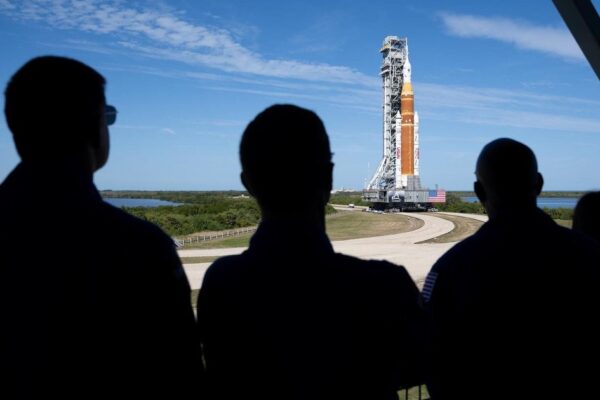
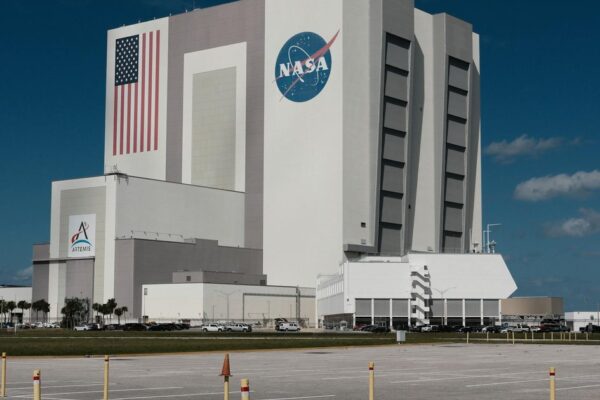
On April 1, 2026, NASA’s Artemis II mission successfully launched from Kennedy Space Center in Florida. This mission carries four astronauts—Commander Reid Wiseman, Pilot Victor Glover, Mission Specialist Christina Koch, and Mission Specialist Jeremy Hansen—on a 10-day journey to orbit the Moon. The mission’s primary goal is to test the capabilities of the Orion spacecraft, which will eventually support future lunar landings, including Artemis III, planned for 2027. This mission represents a significant technical achievement, showcasing advancements in spacecraft design and engineering.
As the spacecraft ascended at speeds of 17,500 mph, it entered Earth’s orbit and prepared for a translunar injection burn. This maneuver will send the spacecraft on a 240,000-mile journey to lunar orbit. NASA’s Artemis program aims to lay the groundwork for sustainable lunar exploration and eventually human missions to Mars. The Artemis II mission is the first crewed flight in the Artemis program and is vital for proving systems and strategies needed for future missions.
The Role of International Partners
Artemis II is more than a U.S. initiative; it embodies international collaboration. The mission includes contributions from space agencies around the world, such as the European Space Agency (ESA), which provided the Orion service module. This partnership underscores how global cooperation in science can tackle challenges that no single nation can face alone.
The international aspect is crucial, especially as space becomes a more contested domain. Countries like China and Russia are ramping up their own space programs, leading to a potential space race reminiscent of the Cold War era. By fostering collaboration through Artemis, the U.S. aims to position itself as a leader in establishing norms and standards in space exploration. This mission could set a precedent for how nations work together in the vast expanse beyond our atmosphere.
A Historical Parallel: Apollo and Its Impact
The Artemis II mission draws parallels to the Apollo program, which first landed humans on the Moon in 1969. The Apollo missions were not just scientific milestones; they transformed American culture and politics. They fostered a sense of unity during a time of social upheaval in the United States. The images of Earth taken from Apollo missions ignited a global environmental movement and changed how people viewed their relationship with the planet.
Fast forward to today, where we face existential threats like climate change and geopolitical tensions. The Artemis II mission serves as a reminder of what humanity can achieve when it unites for a common goal. Just as the Apollo missions inspired a generation, the Artemis program could reignite interest in science and technology among young Americans, fostering future leaders in these fields.
The American Stakes
The Artemis II mission has significant implications for American jobs and the economy. The space sector is a critical driver of innovation, employing hundreds of thousands of workers across the country. According to a report from the Space Foundation, the U.S. space economy was valued at $447 billion in 2022, and it is projected to grow significantly in the coming years. Investments in Artemis and related technologies could lead to job creation in STEM fields, providing opportunities for the next generation of engineers and scientists.
Politically, the Artemis II mission could influence U.S. space policy and funding. With increasing competition from China and Russia, Congress is likely to prioritize funding for NASA and its international partnerships. The mission could also serve as a platform for discussions on space policy, including regulations regarding space debris and the militarization of space. As public interest in space exploration rises, citizens may call for more robust policies to protect our interests beyond Earth.
However, not everyone stands to gain equally. As funding flows into NASA and private space companies, traditional sectors may face resource reallocations. Industries that are not directly tied to the space economy might see a shift in labor and investment focus. This could lead to a disparity in job growth, favoring regions with space industry hubs over others lacking such infrastructure.
Your Action Plan
What does this mean for you? Here are actionable steps to engage with these developments:
1. **Stay Informed:** Follow news updates on the Artemis missions and related space exploration initiatives. Understand how these efforts may impact science education and technology investments.
2. **Advocate for STEM Education:** Encourage local schools and community programs to emphasize STEM (Science, Technology, Engineering, and Mathematics) education. This will prepare the next generation for careers in emerging fields.
3. **Engage in Discussions:** Participate in community forums or social media discussions about space exploration and its implications. Your voice can influence local and national policy.
4. **Invest Wisely:** If you’re considering investments, look into companies involved in space technology and exploration. The burgeoning space economy presents new opportunities for financial growth.
5. **Support Environmental Initiatives:** Space missions generate awareness about Earth’s fragility. Engage with or support environmental organizations advocating for sustainability and responsible resource use.
Numbers That Matter
- $447 billion: The estimated value of the U.S. space economy in 2022, according to Space Foundation data.
- 240,000 miles: The distance the Artemis II mission will cover to reach the Moon.
- 10 days: The duration of the Artemis II mission, as astronauts work on various scientific and operational tasks.
- 54 years: The time since the last crewed mission to the Moon during the Apollo program.
- 4 astronauts: The number of crew members aboard the Orion spacecraft for Artemis II, demonstrating a diverse representation of talent.
The 90-Day Outlook
Keep an eye on how the Artemis II mission progresses in the coming months. With the initial launch now complete, focus will shift to the analysis of data collected during the mission. Expect discussions around future funding for NASA, potential new international partnerships, and policies to address growing concerns about space debris and safety in orbit. By the end of 2026, the outcomes from Artemis II could reshape the global landscape of space exploration and technology innovation, paving the way for Artemis III and beyond.
Marcus Osei’s Verdict
Looking worldwide, this mission parallels China’s recent advancements in space exploration, which have garnered national pride and unity. As their technological prowess grows, will the U.S. continue to lead in fostering global partnerships, or will we retreat into isolation?
My prediction is this: if we harness the momentum generated by the Artemis mission, we could see meaningful strides in international climate agreements and collaborative research initiatives by mid-2027. But if we fail to act, this mission may simply become another footnote in history, remembered for its visuals but lacking substance.