
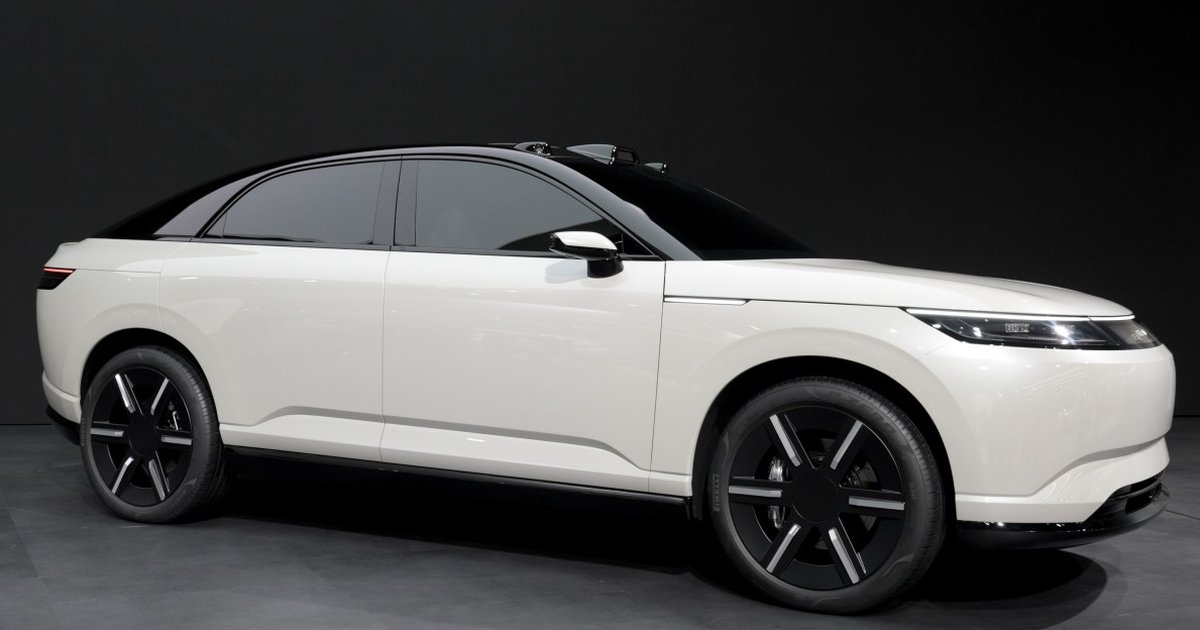
What happens when a $90,000 autonomous vehicle fails to find buyers? Sony and Honda’s Afeela flop reveals deeper issues in the EV market. Your investment in technology and innovation depends on the future of these vehicles.
Why This Story Matters Right Now

Sony and Honda just pulled the plug on their Afeela electric sedan. This decision reflects a broader trend in the autonomous vehicle market, where consumer demand is faltering. For American consumers, this means that the race for electric vehicles (EVs) and self-driving technology may not be as straightforward as once thought.
The Afeela project was positioned as a bold collaboration between a tech giant and an automotive manufacturer. As of April 2026, it’s clear that the ambitious plans have crumbled under financial pressures and market realities. Honda announced a staggering writedown of $15.7 billion on its EV investments, marking a significant retreat from the electric vehicle race. This raises questions about the future of EVs in the U.S. and the sustainability of current investments in autonomous vehicle technology.
The Full Story, Explained
Video: Sony Afeela 1 – Pure Electric Sedan From Sony 2026
The Background
In 2022, Honda and Sony joined forces to create a new automotive brand aimed at integrating advanced technology into vehicles. The Afeela brand promised a premium experience, featuring cutting-edge entertainment and autonomous driving capabilities. However, the partnership faced challenges from the onset, particularly in the volatile landscape of EV production and consumer acceptance.
The U.S. market for electric vehicles has undergone significant changes in the last few years. A report from the U.S. Energy Information Administration showed that sales of EVs peaked in 2023 but began to slow down as consumers faced higher prices and economic uncertainty. Honda’s decision to recalibrate its EV strategy reflects this shifting landscape. The company’s recent losses underscore the difficulties faced by many automakers as they attempt to pivot to electric offerings while maintaining profitability.
By early 2026, Honda’s financial difficulties became evident. The company reported its first annual loss in over 70 years as a public entity. This loss was compounded by the ongoing challenges of scaling production and meeting consumer demand for EVs. The Afeela project, originally slated to disrupt the market, became collateral damage in Honda’s broader strategy shift.
What Just Changed
On March 25, 2026, Sony Honda Mobility (SHM) announced the discontinuation of the Afeela 1 and the unnamed SUV concept. The decision was framed as a necessary adjustment to align with real market conditions, which showed a dramatic downturn in demand for new electric models. As a result, the Afeela brand was effectively shelved, raising eyebrows among industry analysts and consumers alike.
Honda’s writedown of up to 2.5 trillion yen demonstrates the drastic financial implications of this retreat. This figure is not just a number; it signifies how far the automotive sector must go to recover from overhyped projections about EV adoption. The company’s acknowledgment of a “non-viable path forward” for the Afeela project sends a signal to investors and consumers that the dream of fully autonomous vehicles may still be years away.
The Reaction
The announcement triggered swift reactions in the automotive and tech sectors. Financial analysts noted that Honda’s move to scrap the Afeela brand could signal deeper issues within the EV market. Many experts pointed to consumer resistance as a key factor, suggesting that the technology may not be as mature or appealing as once believed. Bloomberg’s analysis emphasized that Honda’s return to conventional vehicles might be a strategic pivot rather than a failure of technology.
Investors reacted negatively to the news, reflecting concerns over Honda’s future strategy. Shares in Honda dropped following the announcement, and market experts speculated that the company may need to refocus its efforts on hybrid models rather than fully electric or autonomous solutions. This sentiment underscores a growing skepticism around the viability of autonomous vehicles in the near term.
The Hidden Angle
Mainstream coverage has focused heavily on the financial implications of Honda’s decision but has largely overlooked the broader context of consumer behavior. The market’s retreat from electric vehicles signals a potential backlash against high prices and the perceived overpromise of autonomous technology. As consumers become more discerning, the bar for what constitutes a viable autonomous vehicle is rising.
Moreover, there’s an undercurrent of regulatory pressure that influences these decisions. With various states and the federal government grappling with how to regulate autonomous driving, manufacturers are becoming increasingly cautious about investing heavily in technology that may face legal and logistical hurdles. This regulatory environment complicates the landscape for companies like Honda and Sony, who need to navigate both consumer expectations and legislative frameworks.
Impact Scorecard
- Winners: Tesla, which has solidified its dominance in the EV market; traditional automakers that stick to hybrid models; consumers who avoid expensive new EVs.
- Losers: Honda and Sony, both of whom face reputational risk and financial losses; investors in Afeela who expected returns from the joint venture.
- Wildcards: Changes in federal EV incentives; shifts in consumer preferences towards hybrid vehicles; advancements in battery technology that could shift market dynamics.
- Timeline: Watch for Honda’s upcoming quarterly earnings report in May 2026; monitor any new policy announcements regarding EVs from the Biden administration in the coming months.
What You Should Do
As an American consumer, this news impacts your decisions on vehicle purchases and investments. If you’re considering buying an EV, think critically about the brand’s viability and the technology’s maturity. The Afeela collapse shows that not all electric vehicles are created equal. Opt for established brands with proven technology and robust support systems.
For those interested in investing, tread cautiously in the automotive sector. The volatility exhibited by manufacturers like Honda suggests that the market for EVs and autonomous vehicles is fraught with uncertainty. Diversify your portfolio to mitigate risk, and stay informed about regulatory changes that could impact the EV market.
The Verdict
Honda’s decision to discontinue the Afeela brand reveals significant cracks in the autonomous vehicle narrative. This setback is not just a blow to Honda and Sony but also a warning for the entire automotive industry. The promise of autonomous vehicles needs to align with consumer demand and technological readiness.
By the end of 2026, we may see a more cautious approach from automakers towards autonomous technologies. Expect a shift back to hybrids and more traditional vehicles as companies reassess their strategies in light of consumer behavior and economic realities. The autonomous vehicle revolution is far from over, but it’s clear that the road ahead is rocky and uncertain.
Marcus Osei’s Verdict
Looking globally, consider the situation with Chinese EV manufacturers. Companies like NIO and Xpeng continue to thrive despite slowing demand in their domestic market by aggressively expanding overseas. This contrasts sharply with Sony Honda’s retreat. In my assessment, they must find a way to adapt and meet consumer expectations effectively.
I predict that by mid-2027, we could see a dramatic shift in strategy from Sony and Honda. If they don’t learn from this misstep and adapt to the evolving market, their involvement in the autonomous vehicle space may dwindle further. The stakes are high, and time is not on their side.